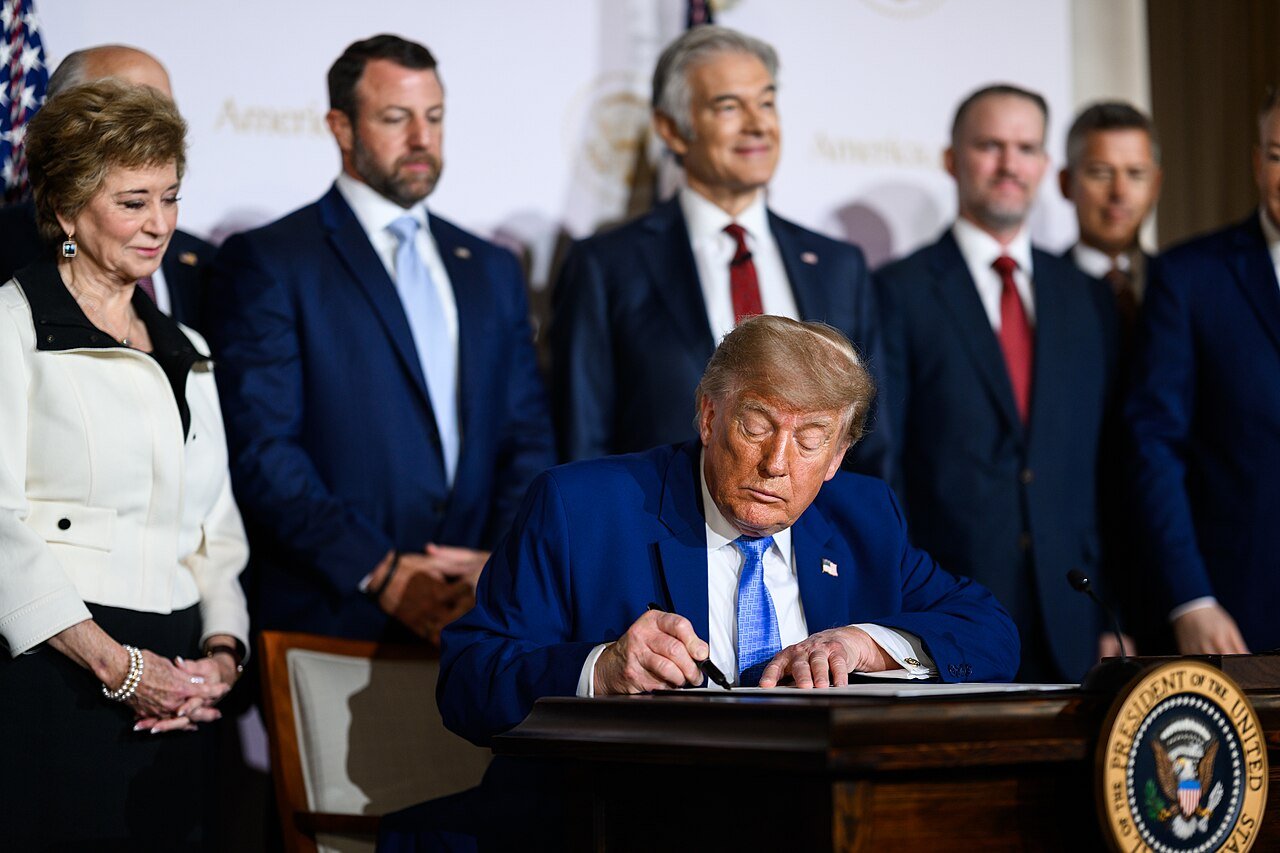
WASHINGTON — President Donald Trump has signed an executive order directing the federal government to build America.gov into a unified digital gateway for major government information and services.
The order, signed September 29, describes America.gov as a single point of entry through which people can seek federal information, communicate in ordinary language, authenticate their identity and, where legally and technically available, complete government transactions without navigating numerous agency websites.
The initiative does not formally eliminate existing agency websites or traditional service channels. The order says the government must preserve lawful alternatives including in-person, telephone, mail and agency-specific digital services.
Under the order, “covered services” generally include public-facing federal services that serve more than 100,000 users over a 12-month period and can be accessed or applied for online. Tax filing services provided by the Internal Revenue Service are excluded, as are services provided by the Department of War and elements of the Intelligence Community. The Office of Management and Budget may add or remove covered services through further guidance.
The General Services Administration, the National Design Studio and OMB are directed to establish and operate the platform. The order also calls for Login.gov to be integrated with America.gov so users can authenticate themselves through the federal government’s existing identity system.
A significant part of the order addresses privacy and agency control of records. It states that individual agencies are to retain custody and control over their records, systems, statutory responsibilities and adjudicatory authority. It also says that unifying access through America.gov is not supposed to create a single centralized federal system of records about the American public.
The order directs agencies to use data minimization, secure authentication and legally compliant authorization and disclosure practices. Agencies must also make existing public APIs, dashboards and digital forms available to America.gov when appropriate for covered services.
OMB has 90 days from the order to issue an implementation memorandum to federal agencies. Agency leaders must then identify their covered services and work to integrate them with the platform.
The White House fact sheet says the government expects users eventually to be able to complete tasks such as passport renewal or Medicare enrollment through America.gov rather than being passed among separate federal websites. The precise timetable for individual services will depend on agency integration and available appropriations.
The executive order is therefore broader than a website redesign. It attempts to place a common digital interface over a large portion of the federal government’s existing service infrastructure while leaving underlying agency records and statutory powers in place.
How effective the system becomes will depend on implementation: the accuracy of its answers, the security of authentication, reliability at scale, accessibility and whether agencies can successfully connect older government systems to the new interface.
Sources for this report
Links to documents or reporting used to prepare this coverage.